AI Weekly Recap, Grok Bot's Claude Gambit, ChatGPT's New UI and Claude Cowork in the Cloud
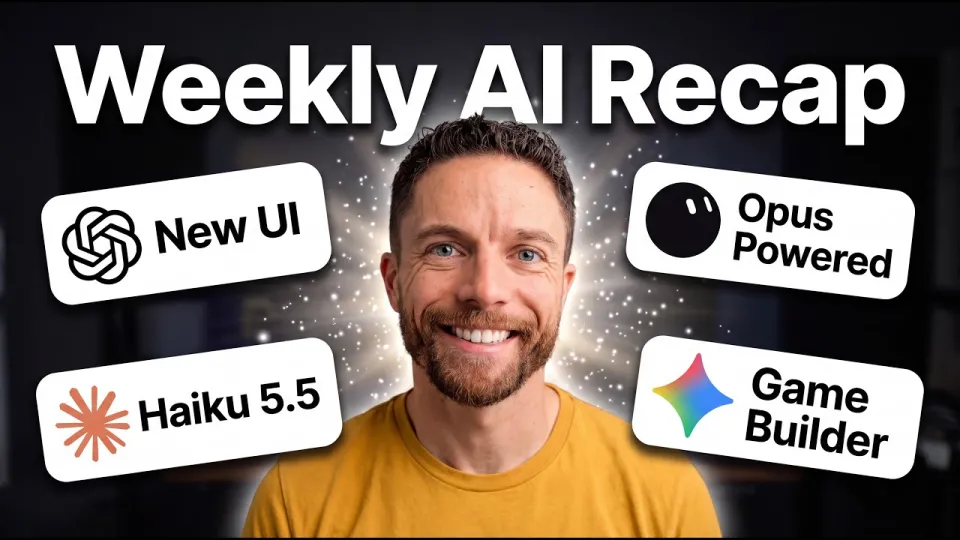
Video: Weekly AI Recap: GrokBot Just Did the Unthinkable, ChatGPT Looks Completely Different & More!
Need articles like this for your video? They help promote it on YouTube and Google — order them in the Telegram bot @sat_sit_bot. Articles with your video embedded are written and posted by the bot itself — on popular topical sites (no ads). Free trial — 50 articles.
· based on the channel Paul J Lipsky
Key takeaways
- Grok Bot is reportedly being wired to call outside models and tools, including Claude, Midjourney and Suno, turning it into an orchestrator rather than a single chatbot.
- ChatGPT is rolling out an "Intelligent UI" that reshapes the interface around intent instead of a single chat box.
- Anthropic's Claude Cowork moves to the cloud, so agent-style work runs on Anthropic's infrastructure rather than a local machine.
- Google is changing its Gemini subscription tiers and ships Nano Banana 2.1 for image generation, with a Google Playground test in the video.
- A recurring viewer request: a Claude Code walkthrough written for non-technical users.
AI this week is less about one model getting smarter and more about systems learning to call each other: Grok Bot is being set up to route work to outside models and tools such as Claude, Midjourney and Suno, ChatGPT is testing an "Intelligent UI", and Claude Cowork has moved into the cloud. The clearest way to follow that shift is Paul J Lipsky's weekly recap, and you can try the sponsor's agent platform via Okou's sign-up page, which is offering a discount code in the video.
What Grok Bot's multi-model plan actually changes
Grok Bot's headline move is orchestration: instead of answering only with its own model, it is being positioned to hand parts of a job to specialised services — Claude for reasoning and writing, Midjourney for images, Suno for audio. That matters because most real tasks are multi-step, and a single model is rarely best at every step. If the routing works, the user stops thinking about which model to open and starts describing an outcome.
The practical evidence came from viewers rather than benchmarks. One user described handing Grok Bot a shared folder of business videos plus a short brief, and getting back a voiceover script, a revised cut and a finished social clip that beat what they had been paying a contractor to produce. That is the pattern to watch: not a better chat reply, but a pipeline that assembles a deliverable from files you already own.
Two caveats are worth keeping in mind. First, cross-model routing means your prompt, files and context travel to third parties, so data-handling terms matter more than raw capability. Second, agent tools that appear without warning confuse people — at least one viewer deleted an unfamiliar "primary" bot assuming something had gone rogue, and could not restore it afterwards. If a new agent shows up in your workspace, read what it is before deleting it.
ChatGPT's Intelligent UI, explained without the hype
ChatGPT's interface is being rebuilt around what you are trying to do rather than around a blank text field. The label OpenAI uses is "Intelligent UI": the product adapts its layout, suggested actions and controls to the task at hand, so a research request, an image edit and a coding question no longer look identical on screen. For long-time users the change is jarring — the tool "looks completely different" — but the logic is consistent with where the market is going: fewer blank pages, more guided workflows.
What to check when you get it:
- Find where your previous chats and custom instructions now live; menus move in interface refreshes.
- Test one task you do weekly and note whether the new layout saves clicks or adds them.
- Look for model and tool pickers — automatic routing is convenient until you need to force a specific model.
- Re-check sharing settings, since new surfaces sometimes reset defaults.
Claude Cowork goes to the cloud — and why that is the bigger story
Anthropic's Claude Cowork, the agent-style mode built for multi-step office work, is moving from local execution to the cloud. The change sounds infrastructural, but it removes the biggest friction point for non-developers: you no longer need a machine that stays awake and configured to run a long task. Work that spans documents, files and follow-up steps can keep running on Anthropic's side.
The trade-off is the usual cloud bargain. You gain persistence and reach — start a job from one device, check it from another — and you give up some control over where files are processed. Teams evaluating Cowork should confirm retention policies and which connectors are allowed before routing sensitive material through it.
There is also a demand signal in the audience: the most-liked request under the recap was a Claude Code tutorial for people who do not write code. Agentic tooling is clearly escaping the developer niche, and vendors that explain it in plain language will win the mainstream users.
Google's week: Gemini plan changes, Nano Banana 2.1 and Playground
Google's updates this week were about packaging as much as capability. Gemini subscription tiers are being reshuffled, and viewers were quick to point out that higher storage bundles now come attached to AI plans — the kind of detail that decides whether an upgrade is worth it. If you pay for Google One or a Gemini plan, compare what each tier includes before renewing.
On the model side, Nano Banana 2.1 refreshes Google's image generation line, continuing the rapid iteration that made the original notable for editing consistency rather than raw novelty. The recap also puts Google Playground — the company's experimental surface for trying models — through a hands-on test, which is the right way to judge these releases: not by demo clips, but by whether a real prompt survives three rounds of edits.
The questions viewers keep asking
The most common thread in the comments is not about any single model but about keeping up. Weekly roundups work because they compress scattered announcements into one sitting, and the day-by-day format in this recap was repeatedly singled out for making the chaos legible.
The second thread is skill-building. Requests for a Claude Code walkthrough aimed at non-technical users outnumbered almost everything else, which suggests the gap in the market is explanation, not capability. The third is trust: people want to know what a new bot in their workspace is before it touches their files, and they want to know which subscription tier actually includes the model they are paying for. Those are reasonable questions, and they are the ones worth asking of every launch covered here.
Bottom line
The week's theme is composition: Grok Bot assembling external models into one workflow, ChatGPT reshaping its interface around intent, Claude Cowork moving the agent runtime to the cloud, and Google repackaging Gemini while iterating on image models. None of these is a leap in raw intelligence, but together they lower the effort of getting real work done — provided you keep an eye on data handling and subscription fine print. Paul J Lipsky's weekly recap remains a reliable way to see the whole board at once, and if you want to test an agent platform yourself, start at Okou and apply the promo code shown in the video for a discount on the Pro or Team plan.
Source: Weekly AI Recap: GrokBot Just Did the Unthinkable, ChatGPT Looks Completely Different & More! · Markdown version
Questions & answers
What does it mean that Grok Bot will use Claude, Midjourney and Suno?
It points to an orchestration model: Grok Bot handles the conversation and task planning, then calls specialised services for reasoning, images or audio. The user describes an outcome instead of choosing a model, but context and files may be sent to several providers.
Is ChatGPT's Intelligent UI just a redesign?
It is more than cosmetics. The interface adapts layout and suggested actions to the task, moving away from a single blank chat box. Expect menus and settings to move, so re-check model pickers and sharing defaults after the update.
What changes for Claude Cowork users now that it runs in the cloud?
Long multi-step jobs no longer depend on your own machine staying on, and you can start work on one device and check it on another. In exchange, files are processed on Anthropic's infrastructure, so confirm retention and connector policies for sensitive material.
Do the new Gemini plans include more than AI features?
Yes, and that is the part easy to miss: higher tiers bundle cloud storage alongside model access. Compare the full package — storage, model access and limits — before upgrading or renewing a Google One or Gemini subscription.